
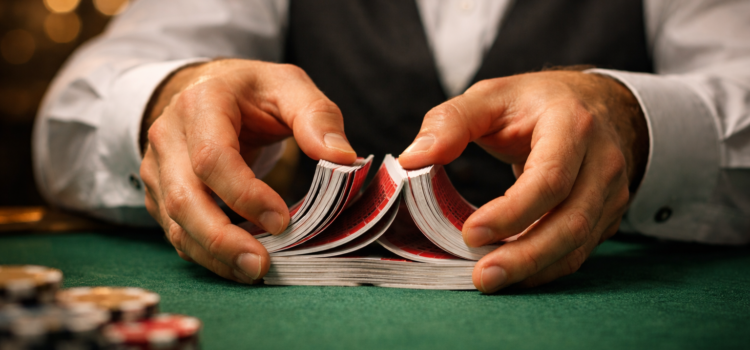
Watching a professional casino dealer shuffle cards looks smooth and effortless. The cards flow between their hands with precision, creating a perfectly mixed deck every time. Learning this skill takes practice, but anyone can master it with the right techniques.
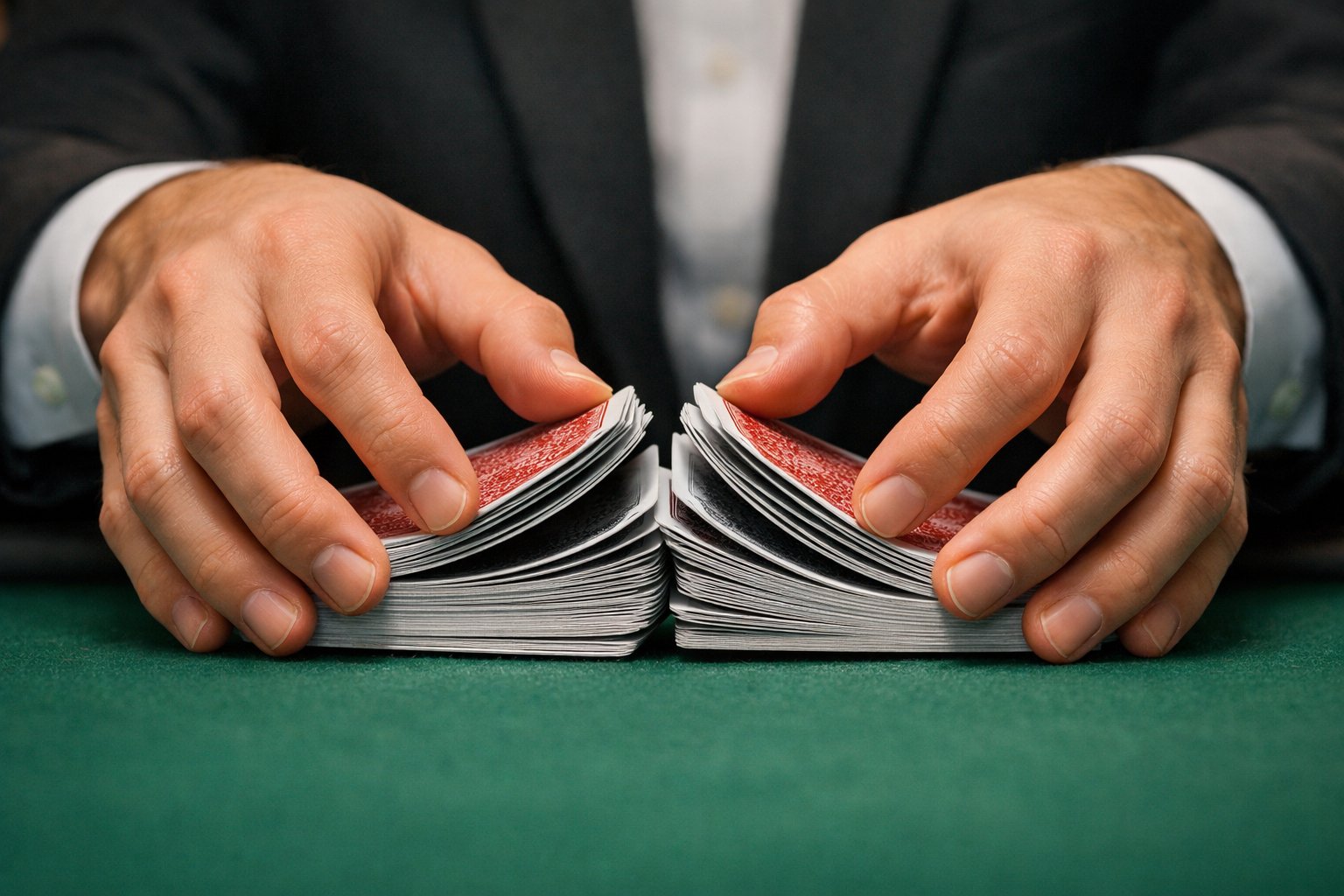
To shuffle cards like a casino dealer, you need to perform a wash of the cards, complete three riffle shuffles, use a cut card, and finish with a proper cut before dealing. This process ensures the deck is truly random and prevents anyone from seeing the bottom card or cheating during the game. Casinos use this exact method to maintain fairness in every card game.
This guide will teach you the proper hand positions, the equipment you need, and the specific techniques dealers use every day. You’ll learn each step of the standard casino shuffle routine, from basic card handling to advanced methods that create a truly random deck. By the end, you’ll be able to shuffle like a professional and bring that casino feel to your home games.
Essential Equipment for Casino-Style Shuffling
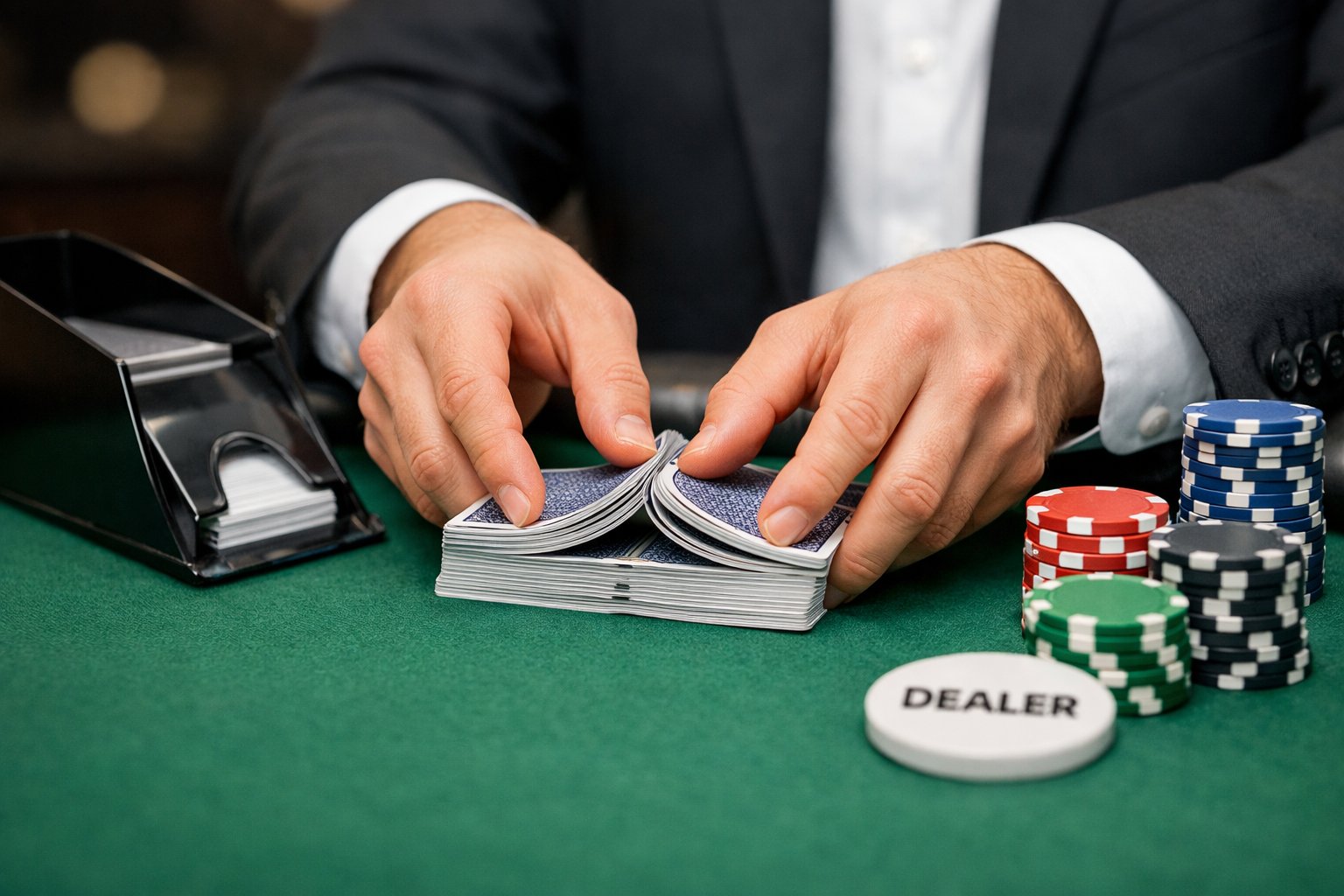
Professional card shuffling requires specific equipment to maintain game integrity and achieve smooth, efficient movements. Quality playing cards and proper table setup create the foundation for developing authentic dealer techniques.
Choosing the Right Playing Cards
Casino dealers work with specialized playing cards designed for durability and handling. Standard poker-size cards measure 2.5 by 3.5 inches, which is the industry standard you should use for practice.
Professional casino cards feature a plastic coating that provides the right amount of slip for riffle shuffling. Brands like Bee and Bicycle make casino-quality decks that hold up to repeated handling. Paper cards wear out quickly and don’t shuffle smoothly, making them poor choices for learning dealer techniques.
The weight and flexibility of your cards matter significantly. Casino cards are stiffer than regular playing cards, which helps them maintain their shape during complex shuffles. You need cards that snap together cleanly during a riffle and don’t bend permanently after use.
New decks work best for practice since worn cards stick together and create uneven shuffles. Replace your practice deck every few weeks to maintain consistent results.
Understanding the Cut Card
A cut card is a solid plastic card in a bright color, usually red or yellow, that serves multiple functions in casino games. Dealers place it near the bottom of the deck to indicate when shuffling is needed.
The cut card typically measures the same size as playing cards but is made from opaque plastic. You can purchase cut cards separately or find them included with casino-quality card sets. This tool prevents players from seeing the bottom card of the deck during dealing.
In blackjack, dealers insert the cut card about one to one-and-a-half decks from the bottom of a six-deck shoe. When the cut card appears during play, the dealer completes that round and then shuffles. This system ensures adequate card randomization while maintaining game flow.
Setting Up the Table
Your shuffling surface needs to be flat, stable, and covered with felt or similar material. Casino tables use speed cloth, a smooth fabric that allows cards to glide without catching.
A table height between 28 and 30 inches lets you shuffle comfortably while standing or sitting on a tall stool. Make sure you have at least two feet of clear space in front of you for spreading and gathering cards.
Good lighting is essential for seeing cards clearly and avoiding mistakes. Position your light source to eliminate shadows on the table surface without creating glare on the cards.
Proper Card Handling Techniques
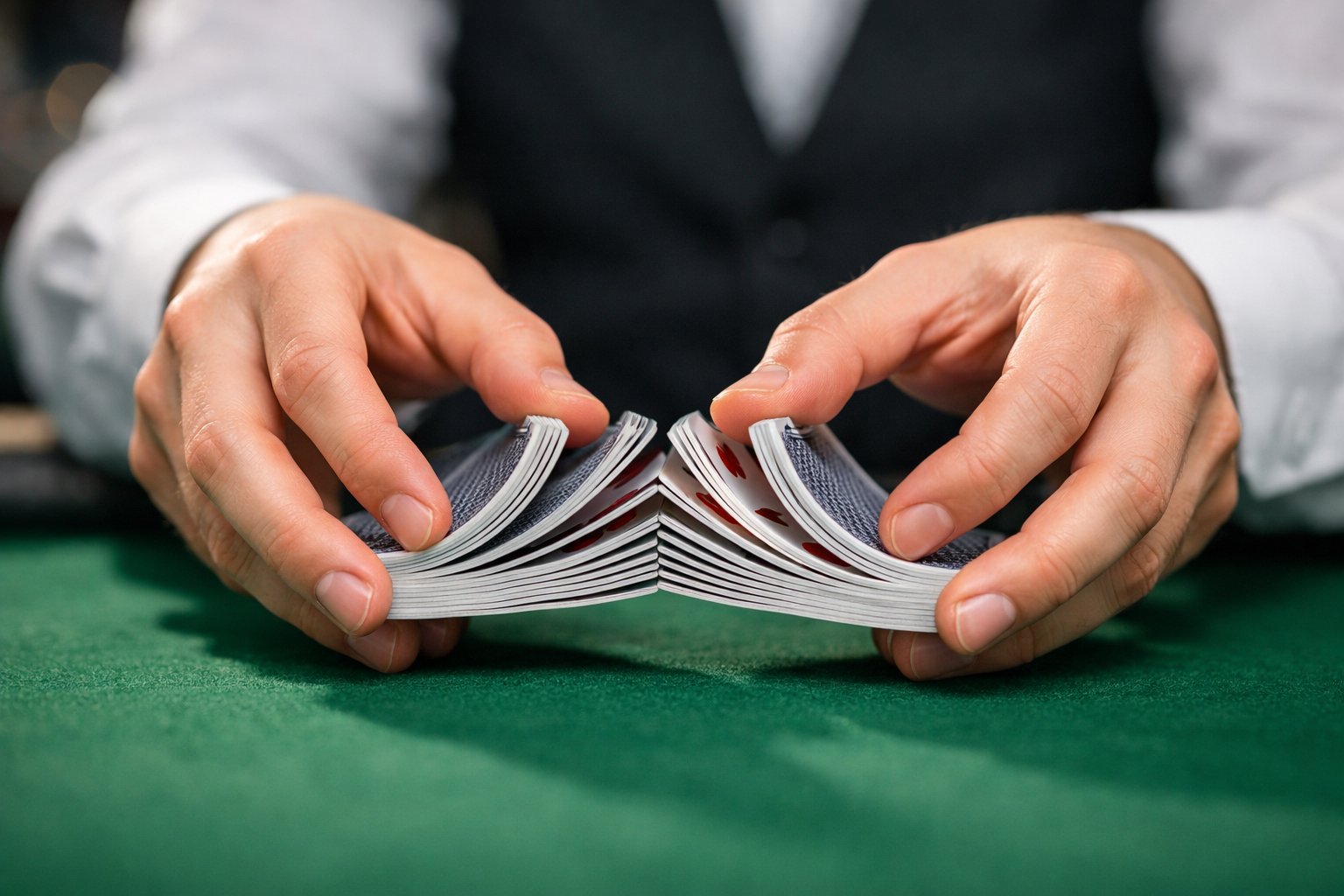
The way you hold and manipulate cards directly affects the quality of your shuffle and prevents accidental exposure. Your grip, deck division method, and shuffling mechanics all work together to create smooth, professional card handling.
Holding the Deck Correctly
Place the deck in your non-dominant hand with your thumb along one long edge and your middle, ring, and little fingers along the opposite edge. Your index finger should rest lightly on top of the deck for stability. The cards should sit in the pocket between your thumb and palm, creating a secure but relaxed grip.
Keep the deck at a slight angle, tilted toward your body. This position prevents players from seeing the bottom card while giving you full control during the shuffle. Your wrist should remain loose and flexible, not tense or rigid.
Avoid common mistakes like gripping too tightly or letting the deck shift in your hand. A proper hold allows you to maintain consistent pressure throughout the shuffle while protecting the cards from damage or unwanted exposure.
Halving the Deck
Split the deck by placing your dominant hand on top and lifting approximately half the cards straight up. Use your thumb to gauge thickness rather than counting individual cards. The two halves should be roughly equal, though perfect precision isn’t necessary for an effective shuffle.
Hold each half in the same grip position you used for the full deck. Place one half on the table if you’re performing a riffle shuffle, keeping it squared and neat. For a single deck shuffle, both halves should feel balanced and comfortable in your hands.
When working with a double deck shuffle, the same splitting principle applies but requires slightly more hand strength. The larger card volume means you need to adjust your grip pressure to maintain control without straining your hands.
Manual Shuffling Best Practices
Keep your movements smooth and consistent throughout the shuffle. Jerky or rushed motions increase the chance of exposing cards or creating an uneven mix. Each riffle should release cards at a steady pace, allowing them to interweave properly.
Position your hands so that cards face downward during the entire process. Never lift the edges high enough that you or players can see card faces. Your thumbs control the release rate while your other fingers provide support and guide the cards together.
Practice your manual shuffling technique with a timer to build muscle memory. Start slowly and focus on accuracy before increasing speed. Professional dealers maintain the same rhythm for every shuffle, which builds trust with players and ensures thorough randomization.
Step-by-Step Casino Dealer Shuffle Routine
Casino dealers follow a specific sequence of shuffling techniques to ensure cards are properly randomized. The standard routine combines washing, riffling, and stripping to prevent card tracking and maintain game integrity.
Wash Shuffle (Scramble Shuffle)
The wash shuffle starts every new deck introduction at casino tables. You spread all cards face down across the table surface and use both hands to mix them in circular motions. This technique is sometimes called a scramble shuffle.
Move the cards around for 30 to 60 seconds to break up any factory order. Your hands should work in opposite directions to create a thorough mix. Keep the cards flat against the table so players cannot see the faces.
You only perform washing when dealers introduce fresh decks to the game. After the initial wash, you won’t use this technique again until the next deck change. This method provides the foundation for all subsequent shuffling steps.
First Riffle Shuffle
The riffle shuffle forms the core of dealer shuffles. You split the deck into two equal halves and place them side by side on the table. Position your hands in an “A” shape over each half.
Press down on two points: your fingertip on one corner and the base of your palm on the opposite corner. Use your thumbs to lift the inner corners of both halves slightly. Let the cards fall together so they interlace, creating a laced deck rather than a chunked one.
A properly laced deck shows cards alternating from each half with no gaps. Keep the cards low to the table so players behind you cannot see card faces. You’ll repeat this riffle shuffle multiple times during the full shuffle routine.
Strip Shuffle Sequence
Strip shuffle moves cards from top to bottom in small groups. Hold the deck at a slight downward angle just above the table. Take a small portion from the top and place it on the bottom.
Repeat this action five to seven times. Never strip from the bottom to the bottom, as this accomplishes nothing. The strip shuffle breaks up any patterns that might remain after riffling.
You can also box the deck during this phase. Take roughly one-third of the cards from the bottom, rotate them 180 degrees, and place them on top. This rotation further prevents card tracking by experienced players who might watch dealer shuffles carefully.
Key Card Shuffling Techniques Used in Casinos
Casino dealers rely on four main shuffling techniques to randomize cards effectively. The table riffle shuffle and weave shuffle provide thorough mixing through interleaving methods, while the overhand shuffle and Hindu shuffle offer quick ways to break up card sequences.
Table Riffle Shuffle
The table riffle shuffle is the most common technique you’ll see in casinos. You start by splitting the deck into two equal halves on the table surface. Place your thumbs at the inner corners of each half and your other fingers at the outer edges.
Bend both halves slightly upward and release the cards gradually so they fall together in an alternating pattern. This interleaving action mixes the cards thoroughly. Casino dealers typically perform three to four riffle shuffles in sequence to achieve proper randomization.
You must keep the cards face down throughout the process. The table surface provides stability and helps you maintain control. This technique works because it splits and recombines the deck multiple times, making it nearly impossible for cards to stay in predictable patterns.
Weave Shuffle
The weave shuffle is similar to the riffle shuffle but happens in your hands rather than on the table. You hold one half of the deck in each hand with your fingers supporting the cards from below and your thumbs on top.
Push the two halves together so the corners meet and the cards weave into each other. Unlike the table riffle where cards fall naturally, you actively push the cards together in a controlled manner. This creates a tight interleave between the two halves.
Many dealers prefer this method because it looks professional and keeps the cards elevated off the table. The weave shuffle requires more finger strength and coordination than the table riffle. You get the same randomization benefits while maintaining a cleaner presentation.
Overhand Shuffle
The overhand shuffle involves holding the deck in one hand and using your other hand to pull small packets of cards from the top. You drop these packets into your opposite hand, gradually transferring the entire deck. This technique is simple and doesn’t require a table.
Casino dealers often use the overhand shuffle between riffle shuffles to add extra randomization. It works well for breaking up any remaining sequences in the deck. You can control the size of each packet you pull, though smaller packets generally create better mixing.
This shuffle is less effective on its own compared to the riffle shuffle. Casinos combine it with other techniques as part of their standard shuffling procedure.
Hindu Shuffle
The Hindu shuffle starts with you holding the deck lengthwise in one hand. Your other hand grips packets of cards from the top and pulls them away, letting them fall into your palm. You repeat this motion until the entire deck transfers from one hand to the other.
This technique originated in Asia and differs from the overhand shuffle in how you grip and release the cards. You pull cards from the top rather than dropping them, which creates a different mixing pattern. The motion feels more fluid once you develop the muscle memory.
Casino dealers in certain regions favor this shuffle because it’s fast and efficient. It also makes card tracking difficult for players trying to follow specific cards through the shuffle.
Advanced Shuffling Methods for Dealers
Once you master basic shuffling techniques, advanced methods help you maintain card randomization and prevent tracking. These techniques include precise shuffles that require practice and procedures that break up card sequences effectively.
Faro Shuffle Explained
The faro shuffle splits the deck into two equal halves and weaves them together perfectly. Each card from one half alternates with a card from the other half. This creates a precise shuffle where cards interlace in a one-to-one pattern.
You need to split a 52-card deck into two stacks of 26 cards each. Hold one half in each hand with your thumbs at the inner edges. Push the halves together so the corners meet at a slight angle. Apply even pressure as you release the cards slowly, letting them weave together.
Two types exist:
- Out-shuffle: Top and bottom cards stay in place
- In-shuffle: Top and bottom cards move inward
This shuffle requires significant practice because the cards must interlace perfectly. Many dealers spend weeks developing the muscle memory needed. While rarely used in actual casino settings due to time constraints, it demonstrates advanced card handling skills.
Running Cuts Technique
Running cuts involve taking small packets from the top of the deck and placing them on the table in succession. You hold the deck in one hand above the table at a downward angle. With your other hand, you pull off small groups of cards from the top and stack them in a pile.
Each packet should contain roughly equal numbers of cards. Pull between 5 to 10 cards per cut. Continue this process until you’ve transferred the entire deck into the new stack. This method differs from stripping because you create multiple small piles that build into one stack rather than moving larger chunks.
Running cuts help randomize cards that might cluster together during play. The technique works best when combined with riffles and other shuffling methods to achieve thorough mixing.
Boxing the Deck Procedure
Boxing the deck involves taking a portion from the bottom, rotating it 180 degrees, and placing it on top. You grip the deck firmly and remove roughly one-third of the cards from the bottom section. Turn this packet completely around so the cards face the opposite direction in your hand.
Place this rotated portion directly on top of the remaining deck. This rotation disrupts card sequences and prevents players from tracking specific cards through the shoe.
Key points for proper boxing:
- Remove bottom third consistently
- Complete full 180-degree rotation
- Place rotated section flush on top
You typically box the deck between other shuffling procedures like riffles and strips. This creates multiple disruption points in the shuffle sequence. The technique specifically counters advantage players who attempt to follow high-value cards through the deck.
Cutting and Completing the Shuffle
After you finish your shuffles, you need to cut the deck and use a cut card to prevent anyone from seeing the bottom card. These final steps protect the game’s integrity and complete the professional dealing process.
Using the Cut Card Effectively
A cut card is a solid piece of plastic that sits at the bottom of the deck during dealing. You can use the yellow cards found in casino supply stores, or a credit card works in a pinch.
Place the cut card face down on the table before you cut the deck. Cut about half the deck and place it on top of the cut card. Stack the remaining cards on top to complete the cut.
The cut card prevents players from seeing the bottom card while you deal. It also stops dishonest dealers from dealing cards from the bottom of the deck. Keep the cut card in place throughout the entire deal.
Some dealers prefer to have another player cut the deck for added fairness. If you choose this method, place the cut card down first, then let the player cut the deck onto it.
Finalizing the Shuffle
After placing the cut card, square up the deck by tapping it gently on the table. Tap the sides and ends to align all cards perfectly. A squared deck looks professional and makes dealing easier.
Hold the deck with your dealing hand and keep it about an inch above the table. Your thumb should rest on one side while your other fingers support the opposite side. This grip gives you control during the deal.
Check that no cards stick out from the deck. Any cards that extend beyond the others could give players information about what’s coming. Take a moment to ensure everything looks clean and professional.
The deck is now ready for dealing. Keep the cut card at the bottom and maintain your grip throughout the hand.
Common Mistakes to Avoid
Don’t skip the cut card. New dealers often forget this step, which exposes the bottom card to everyone at the table.
Avoid cutting the deck in the same spot every time. Varying your cut location adds more randomness to the shuffle. Cut anywhere from one-third to two-thirds through the deck.
Never look at any cards during the cutting process. This breaks player trust and violates basic dealing ethics. Keep your eyes on your hands and the deck as a whole.
Don’t rush through the cut. Taking an extra second to square the deck properly prevents cards from flying off during the deal. A messy cut makes you look unprofessional and can slow down the game.
Some dealers make the mistake of placing the cut card on top of the deck instead of the bottom. The card belongs underneath the entire deck where it blocks the bottom card from view.
Frequently Asked Questions
Casino dealers rely on specific shuffling methods that prioritize randomness and prevent card exposure. A casino wash involves spreading cards face down and mixing them in circular motions, while the standard casino shuffle differs significantly from casual home shuffling through its structured approach.
What techniques do casino dealers use to shuffle cards effectively?
Casino dealers start with a wash by spreading all cards face down on the table. They mix the cards in circular motions with both hands to break up any existing patterns.
After the wash, dealers perform three riffle shuffles. They split the deck in half and interleave the cards by bending the edges slightly and letting them fall together. This technique requires practice to avoid exposing any card faces.
Dealers then complete a strip shuffle by taking small packets from the top of the deck. They place these packets on top of each other to add another layer of randomness. A final riffle shuffle and cut complete the process.
Can you learn to shuffle cards professionally through online tutorials?
You can learn professional shuffling techniques through online videos and written guides. Many tutorials demonstrate the exact hand positions and movements that casino dealers use.
Practice is the most important part of learning these techniques. You need to repeat the motions hundreds of times to develop the muscle memory required for smooth, professional shuffling.
Online tutorials work best when you practice alongside the video. You can pause and replay sections until you master each step.
What are the steps involved in shuffling cards without bending them?
The casino wash lets you mix cards without bending them at all. You spread the cards face down and move them around the table with your palms and fingers.
A strip shuffle also avoids bending cards. You lift small groups of cards from the top and place them elsewhere in the deck. This method works well for expensive or delicate cards.
The riffle shuffle does require slight bending, but proper technique minimizes stress on the cards. You bend only the corners just enough to let the cards interleave.
Is there a difference between a regular card shuffle and a casino dealer shuffle?
A casino shuffle follows a specific sequence designed to maximize randomness. Regular shuffles at home often skip steps or use less effective techniques.
Casino dealers never expose card faces during the shuffle. They keep all cards flat against the table or held in ways that prevent anyone from seeing the values.
The casino method combines multiple shuffle types in sequence. A typical home shuffle might use only one technique, which doesn’t randomize the deck as thoroughly.
How can beginners master the art of shuffling cards like a pro?
Start by practicing the wash technique on a smooth table surface. This builds your comfort with handling a full deck and helps you understand card movement.
Focus on one shuffle type at a time. Master the riffle shuffle before attempting to combine it with other techniques. Your hands need to learn the proper grip and release timing.
Practice for 10-15 minutes daily rather than long sessions. Short, frequent practice sessions help you build muscle memory without causing hand fatigue.
What is a ‘casino wash’ and how does it relate to card shuffling?
A casino wash is the first step in professional card shuffling. You spread all 52 cards face down on the table in a messy pile.
You then use both hands to mix the cards in circular and random motions. This process breaks up any sequence or pattern left from the previous game. The wash typically lasts 10-15 seconds.
Dealers use the wash because it provides initial randomization before other shuffle techniques. It ensures that even if the deck started in perfect order, those patterns get disrupted immediately.